
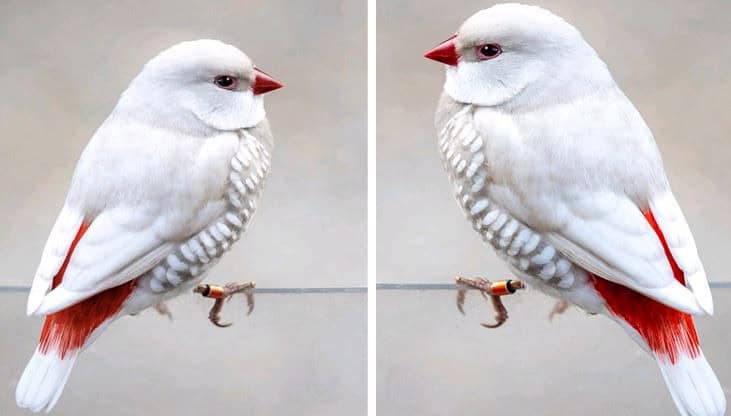
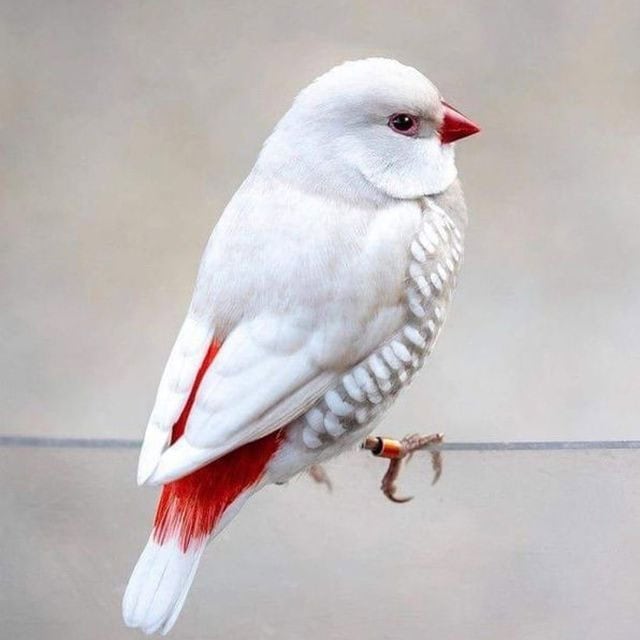
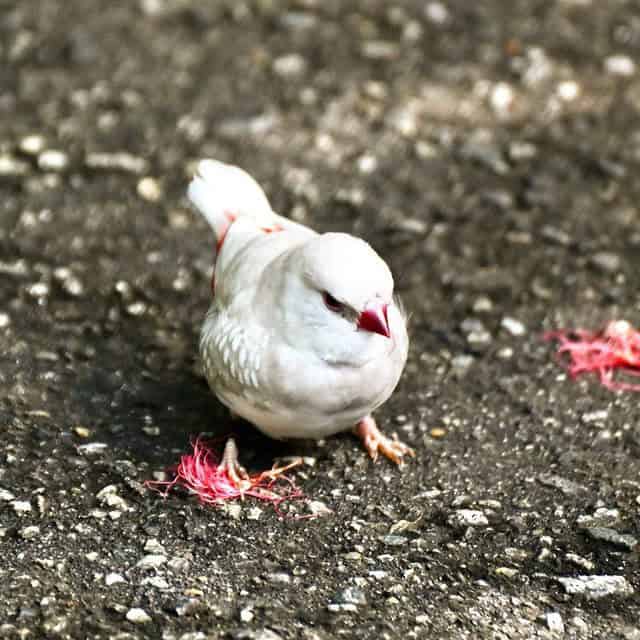
Among the many wonders of the avian world, the silver diamond firetail stands out as a rare and stunning bird, often likened to a Christmas angel with flickering flames beneath its robes.
This exquisite bird is a unique variant of the diamond firetail (Stagonopleura guttata), a finch only skilled breeders can produce by carefully selecting parents with specific recessive genes. The result is a bird adorned with glowing, pearl-white plumage that captivates the imagination.
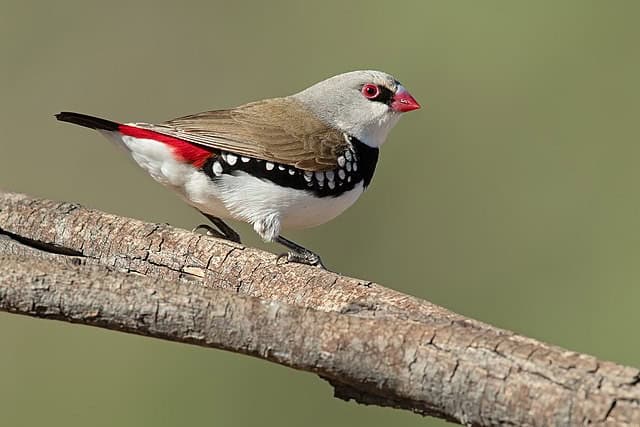
The diamond firetail, from which this variation originates, features vibrant red accents on its bill, eyes, and rump. A distinctive black band extends across its throat, meeting the lower wings decorated with delicate white spots.
Native to the diverse landscapes of southeast Australia, the silver diamond firetail’s range stretches from Queensland’s Carnarvon Ranges to South Australia’s Eyre Peninsula and Kangaroo Island.
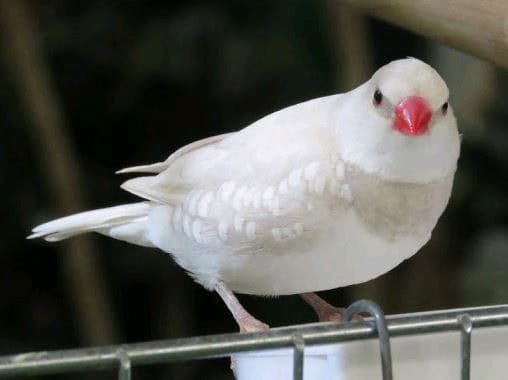
Measuring 10 to 12 centimeters long and weighing about 17 grams, this robust bird is larger than its tiny relative, the mini emu-wren, which weighs only 4 grams.
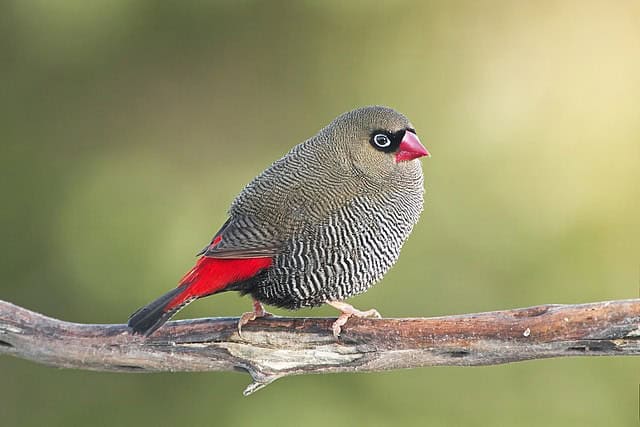
The silver diamond firetail is one of three firetail finches native to Australia. The red-eared firetail (Stagonopleura oculata) inhabits the southwest, while the beautiful firetail (Stagonopleura bella) is found in the southeast, ranging from Newcastle to Kangaroo Island.
The beautiful firetail is distinguished by its plump body, vivid red beak, sky-blue-rimmed eyes, and bright crimson tail. It prefers coastal scrublands and forests, often staying near water sources where its distinct calls can be heard.
Though not officially classified as threatened, Australia’s firetail finches face declining populations due to habitat loss, predation by feral cats, and competition from other native species like the pied currawong. Conservation efforts are underway to help protect these unique birds and their habitats.
The silver diamond firetail and its relatives testify to nature’s intricate artistry, reminding us of the delicate balance that sustains our planet’s rich biodiversity.
Read More Birds